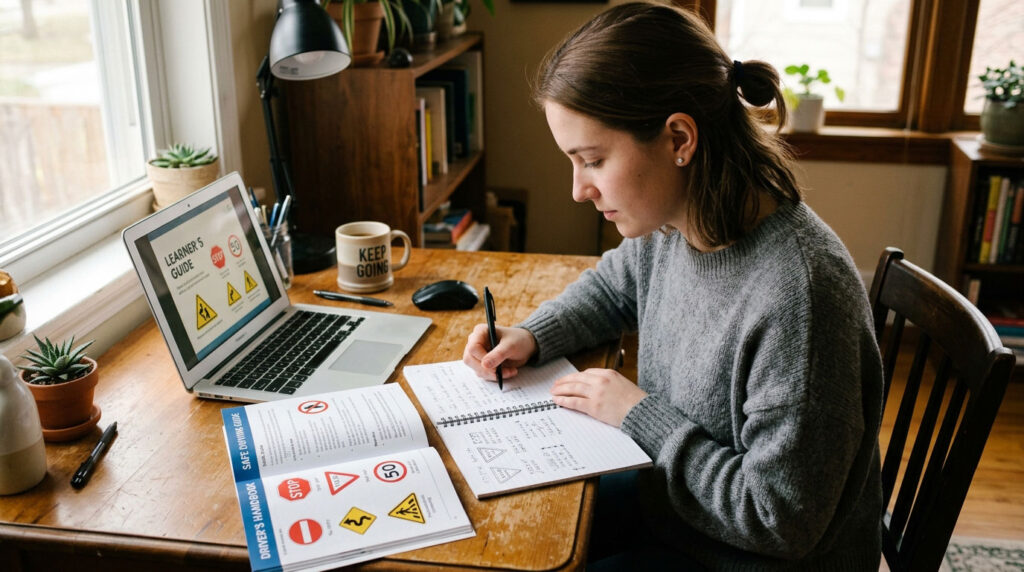
Preparing for a learner’s permit means learning how to respond when the road changes. Orange signs, shifted lanes, and workers directing traffic deserve attention alongside intersections and parking rules. Studying work-zone safety for permit tests helps connect traffic-control messages with the actions they require, rather than simply memorizing pictures.
Information checked September 24, 2026. Requirements vary by state.
Why Work-Zone Safety Matters for Learners in 2026
Connecticut’s current knowledge-test instructions state that learner’s permit applicants must complete its free online Work Zone Safety Course, effective January 1, 2026. Applicants must print their completion certificate and provide it to the DMV with their other required documents before taking the knowledge test. Completing the course does not replace that test.
Washington has a different timeline. Its work-zone and first-responder course becomes mandatory on November 1, 2026, for first-time driver license applicants younger than 25. The free course is already available and can be completed before or after other required education and testing. This is a license requirement, not a nationwide permit-test rule.
Check the Requirement for Your Application
These changes do not mean every state has added the same course or changed its question bank. Check your licensing agency’s instructions for your age, application stage, and expected licensing date. For the broader application process, start with our learner’s permit basics guide.
Recognize Work-Zone Signs Before Memorizing Answers
The New York DMV traffic-control guide explains that work-area signs use orange backgrounds with black lettering or symbols. Examples warn about construction, roadwork ahead, and flaggers. When studying, connect each sign with a question: What could change ahead, and what should I prepare to do?
Study more than color. Explain the message, any distance shown, and whether a sign warns of a hazard or gives a traffic rule. Use your own handbook to check the answer, then explain the meaning aloud without looking at your notes.
Know How to Respond Inside a Work Zone
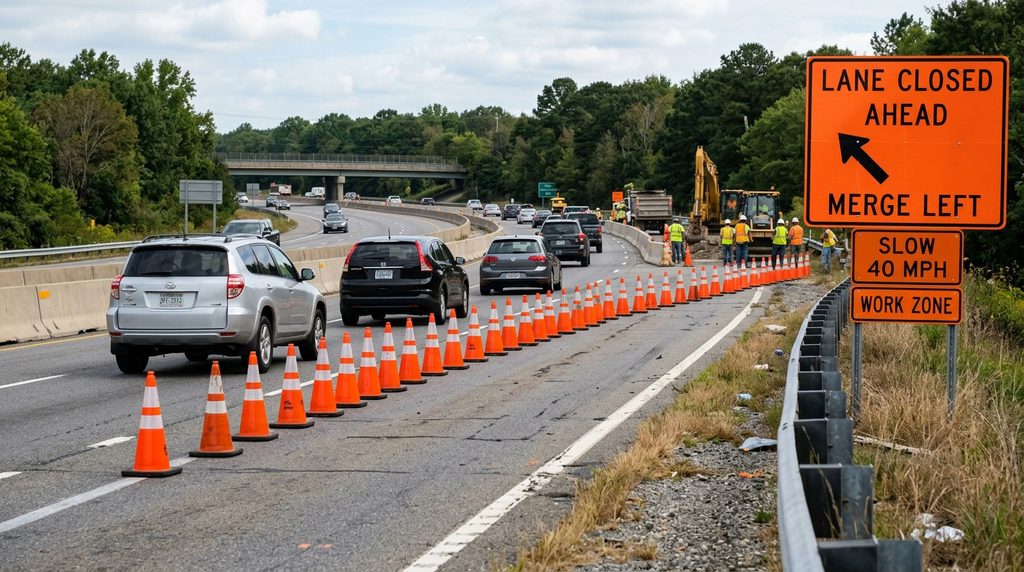
The California Driver Handbook’s work-zone guidance emphasizes slowing down, increasing space between vehicles, watching for lane changes, and anticipating sudden stops. It also directs drivers to follow cones and barriers without crossing them, obey workers’ instructions, and watch for bicycles where lanes narrow or shoulders close. Compare these topics with your own handbook.
Follow Flaggers, Not Impatient Drivers
Study the stop, proceed, and slow signals illustrated in the New York guide linked above. Another driver’s horn or movement is not permission to ignore a flagger. Wait for the applicable instruction and proceed cautiously when directed.
Understand Merging Without Assuming One Universal Rule
Merging advice depends on conditions and traffic controls. The Minnesota Department of Transportation’s zipper-merge guidance explains using both lanes during backups, then alternating at the defined merge point. When traffic is moving at highway speeds without a backup, it advises moving into the open lane sooner when safe.
Do not turn either situation into an absolute answer for every question. Read whether traffic is congested, which lane is closing, and what the signs direct. Follow your state’s handbook and the traffic controls at the actual location.
A Warning Sign Does Not Set One Nationwide Speed
Avoid memorizing a single work-zone speed for every road. New York’s handbook, for example, explains that reduced-speed driving is required through work zones even when no limit is provided. Check your state’s rules and distinguish posted limits from advisory information.
Leave Space Around Trucks and Equipment
The Federal Highway Administration’s work-zone safety tips advise watching for sudden stops, avoiding distractions, and not making abrupt lane changes in front of slowing trucks. In a study scenario, consider what the larger vehicle can see and whether your proposed maneuver removes its stopping space.

Build a Focused Work-Zone Study Routine
Use the following as a suggested routine, not an official course or a promise of passing. Begin with your current state handbook and any required course. Then use practice questions to identify gaps. Keep application requirements separate from study notes so a completed quiz is never mistaken for an official certificate.
Work Through Three Short Study Sessions
Session one: identify. Review signs and flagger signals. Cover the explanations and describe what each one means. Write down the page containing any unclear rule.
Session two: apply. Sketch a lane closure, a stopped queue, and equipment entering a work area. Explain where you would look, what could change, and which instruction controls your next action.
Session three: review. Return to missed questions and explain why the incorrect options are wrong. Ask a qualified instructor about anything that remains unclear. Study while safely parked or away from the vehicle, never while driving.
Try an Original Practice Scenario
Scenario: You approach a work zone where a flagger signals you to stop, but the driver behind you sounds the horn. Should you continue?
Answer: No. Follow the flagger’s instruction and wait until directed to proceed. This example applies the traffic-control principles described above; it is not a question taken from an official DMV examination.
Connect Your Study Plan With Your Permit Checklist
Before booking, confirm required courses, completion records, identification documents, and testing arrangements with your agency. Revisit those instructions close to your appointment rather than relying on an older checklist.
Continue your preparation through our Permit Preparation guides and Driving Basics articles. Make understanding the reason behind each answer your goal, alongside meeting the actual requirements for your permit.
Student Drivers is an independent informational website, not a driving school or government agency. Our articles do not replace professional instruction, official driver handbooks, or current licensing requirements. Confirm the requirements that apply to you with your state licensing agency.